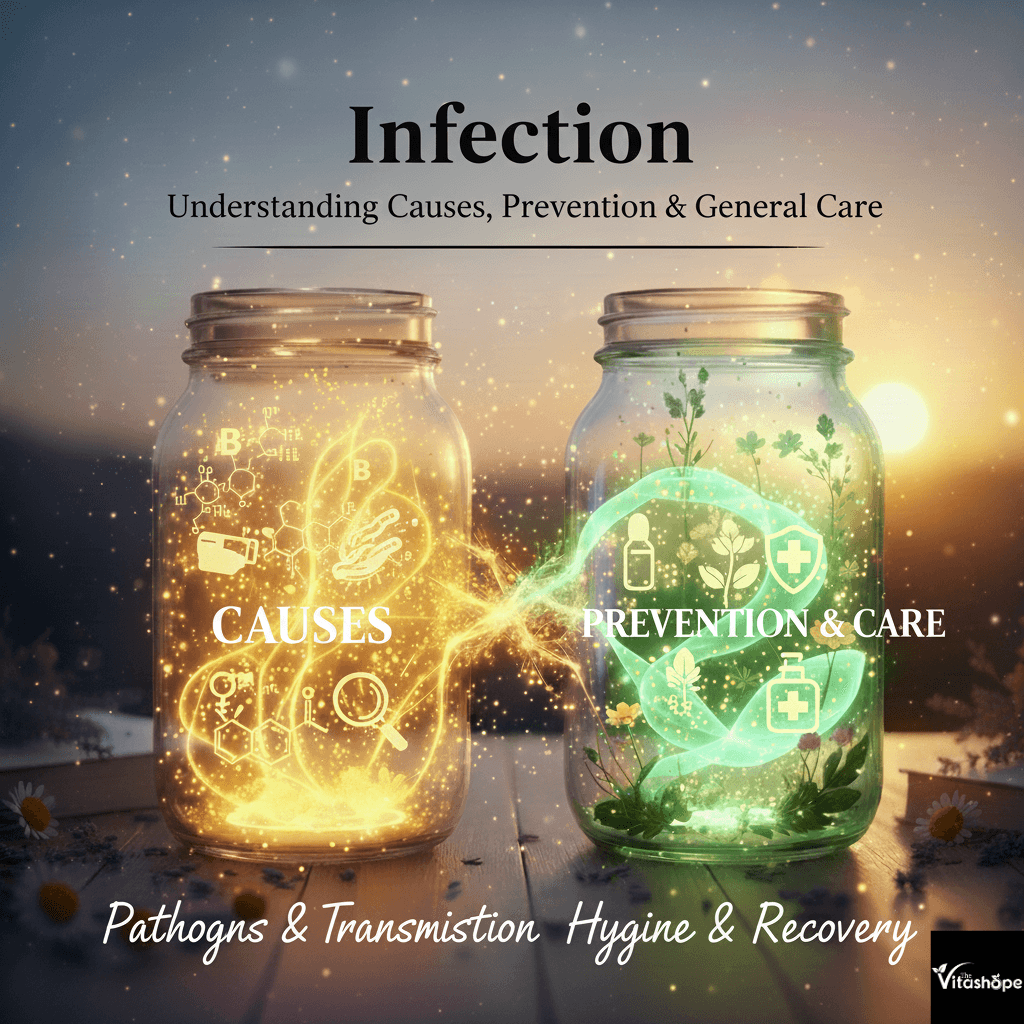
An infection occurs when harmful microorganisms such as bacteria, viruses, fungi, or parasites enter the body and begin to multiply. Infections can affect different parts of the body and may range from mild to more serious, depending on the cause and individual health factors.
This page is provided for general awareness and educational purposes only and does not replace medical advice.
What Causes Infections?
Infections are caused by various microorganisms, including:
Bacteria – Can cause localized or systemic infections
Viruses – Spread through contact, air, or bodily fluids
Fungi – Often affect skin, nails, or respiratory areas
Parasites – May enter through food, water, or insect bites
These microorganisms can spread through direct contact, contaminated surfaces, food, water, or airborne particles.
Common Types of Infections
Infections can affect many areas of the body, such as:
Respiratory infections
Skin infections
Urinary tract infections
Digestive system infections
Eye and ear infections
Each type requires specific medical evaluation and care.
General Signs of Infection
Symptoms vary depending on the type of infection but may include:
Fever or chills
Fatigue or weakness
Redness, swelling, or pain
Cough or sore throat
Changes in digestion
If symptoms persist or worsen, professional medical attention is important.
Prevention & Hygiene Practices
Good hygiene and healthy habits can help reduce the risk of infection:
Wash hands regularly with soap and water
Maintain clean living and cooking areas
Follow food safety guidelines
Avoid close contact with sick individuals
Support general immunity through balanced nutrition and rest
Supplements & General Wellness
Some people use vitamins and wellness supplements to support overall health as part of a balanced lifestyle. These products are not treatments for infections, but may complement daily wellness routines.
Always consult a healthcare professional before using supplements for health-related concerns.
When to Seek Medical Advice
You should consult a qualified healthcare provider if:
Symptoms are severe or persistent
Fever lasts more than a few days
There is difficulty breathing
Signs of infection worsen
Infection occurs in vulnerable individuals (children, elderly, or immunocompromised)
Final Notice
Infections require proper medical assessment and care. This content is intended to increase awareness and understanding, not to diagnose, treat, or cure any condition.
⚠️ Important Disclaimer
This page is for informational purposes only and does not replace advice from a licensed medical professional.