
Blog
Fenbendazole 444 mg: Important Facts, Risks & Precautions

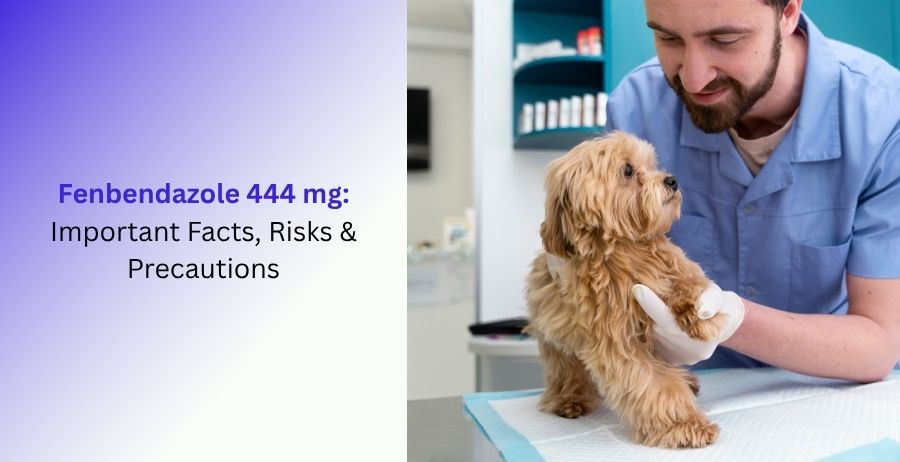
Fenbendazole is a benzimidazole anthelmintic used primarily in veterinary medicine to treat certain intestinal parasites in animals. Fenbendazole 444 mg refers to a product containing 444 mg of the active ingredient.
A key safety point is that fenbendazole is not an FDA-approved human medicine. It should not be treated as an established human therapy simply because it is available as an animal dewormer. Human evidence for many proposed uses remains limited, and veterinary products are not formulated or evaluated as human medicines.
This guide explains important facts about fenbendazole 444 mg, its veterinary uses, potential risks, precautions, and what people should know before considering its use.
What Is Fenbendazole 444 mg?
Fenbendazole is an antiparasitic drug belonging to the benzimidazole class.
It works by interfering with structures called microtubules that parasites need for normal cellular function. This can impair parasite energy use and eventually lead to elimination of susceptible parasites.
Fenbendazole is commonly formulated for veterinary use in animals such as dogs, cats, horses, cattle, and other species, depending on the specific product and local approvals.
The 444 mg amount describes the quantity of fenbendazole in a particular product or dose, but it does not establish an appropriate human dose.
What Is Fenbendazole Used For?
Fenbendazole is primarily used in veterinary medicine to treat susceptible parasitic infections.
Depending on the animal species and product, it may be used against certain:
- Roundworms
- Hookworms
- Whipworms
- Some tapeworms
- Other susceptible gastrointestinal parasites
The exact parasites treated vary by species and veterinary product.
Fenbendazole should therefore be used according to veterinary instructions for the animal and product involved.
Is Fenbendazole Approved for Human Use?
No. Fenbendazole is not FDA-approved as a human medication.
This distinction is important because an animal medicine’s availability does not mean that it has been established as safe or effective for people.
Fenbendazole has received attention because of laboratory research and anecdotal claims involving cancer. However, laboratory findings or individual reports do not establish that fenbendazole is an effective cancer treatment in humans.
People should not replace established medical treatment with fenbendazole.
Fenbendazole and Cancer Claims
Fenbendazole has been investigated in laboratory and preclinical research, including research involving cancer cells and animal models.
However, these findings should not be interpreted as proof that fenbendazole treats cancer in humans.
Important differences exist between:
- Laboratory experiments
- Animal studies
- Human clinical trials
- Anecdotal reports
A treatment needs appropriate human clinical evidence to establish whether it is safe and effective for a specific disease.
Anyone receiving cancer treatment should speak with their oncologist before taking fenbendazole or any veterinary medicine.
Fenbendazole 444 mg Dosage
There is no established FDA-approved human dosage for fenbendazole 444 mg.
Veterinary dosing varies according to:
- Animal species
- Body weight
- Type of parasite
- Severity of infection
- Product formulation
- Veterinary treatment guidelines
Therefore, veterinary dosing instructions should not be converted into a human dosing schedule.
Taking a larger amount does not necessarily make the medicine more effective and may increase the risk of adverse effects.
Possible Fenbendazole Side Effects
Fenbendazole is generally considered well tolerated in many animals when administered according to veterinary directions. However, adverse reactions can occur.
Potential effects may include:
- Vomiting
- Diarrhea
- Reduced appetite
- Abdominal or gastrointestinal discomfort
- Lethargy
- Allergic reactions
The effects can vary according to the animal, dose, duration, and underlying health conditions.
Human safety data are limited because fenbendazole is not an approved human medicine.
Important Fenbendazole Risks
Using an unapproved veterinary medicine in humans creates uncertainties regarding:
- Appropriate dosing
- Long-term safety
- Drug interactions
- Product purity and formulation
- Effects in people with liver or kidney problems
- Safety during pregnancy or breastfeeding
Self-treatment may also delay diagnosis or established treatment for an underlying condition.
If someone experiences unusual or severe symptoms after taking fenbendazole, medical advice should be obtained promptly.
Fenbendazole and Liver Health
Liver-related concerns are particularly relevant when considering unapproved use in humans.
Fenbendazole and related benzimidazole drugs are processed through the body using metabolic pathways that involve the liver.
Anyone with known liver disease should avoid self-treatment and discuss all medications and supplements with a healthcare professional.
Symptoms such as yellowing of the skin or eyes, dark urine, persistent nausea, severe abdominal discomfort, or unusual fatigue require medical evaluation.
Fenbendazole Drug Interactions
Because fenbendazole is not approved for human use, comprehensive human interaction data are limited.
People should not assume that it is safe to combine fenbendazole with prescription medicines.
Potential concerns may be greater for people taking:
- Anticancer medicines
- Anticoagulants
- Anticonvulsants
- Medicines affecting liver enzymes
- Other antiparasitic medicines
- Multiple prescription medications
If you are taking regular medication, consult a healthcare professional before using any veterinary medicine.
Fenbendazole During Pregnancy and Breastfeeding
Fenbendazole should not be self-administered during pregnancy or breastfeeding.
There is insufficient evidence to establish an appropriate human treatment regimen and comprehensive safety profile for these situations.
Pregnant or breastfeeding individuals should discuss any suspected parasitic infection with an appropriate healthcare professional.
Fenbendazole 444 mg vs Human Antiparasitic Medicines
| Feature | Fenbendazole 444 mg | Albendazole | Mebendazole |
|---|---|---|---|
| Primary status | Veterinary medicine | Human medicine in many countries | Human medicine in many countries |
| Main use | Animal parasite treatment | Certain human parasitic infections | Certain human parasitic infections |
| FDA-approved for humans? | No | Yes, for specific indications | Yes, for specific indications |
| Human dosing established? | No | Yes, for approved uses | Yes, for approved uses |
| Product formulation | Veterinary-specific | Human formulations | Human formulations |
| Human safety evidence | Limited | Established for approved indications | Established for approved indications |
| Recommended for self-treatment? | No | No | No |
This comparison demonstrates why veterinary fenbendazole should not automatically be considered equivalent to approved human antiparasitic medicines.
Important Precautions
If you are considering fenbendazole, keep these precautions in mind:
- Do not assume veterinary fenbendazole is safe for human use.
- Do not use it as a substitute for approved medical treatment.
- Do not convert animal dosing into a human dose.
- Tell your healthcare professional about all medicines and supplements you use.
- Avoid self-treatment if you have liver disease or other significant health conditions.
- Do not use fenbendazole during pregnancy or breastfeeding without professional guidance.
- Seek appropriate diagnosis for suspected parasitic infections.
- Do not use fenbendazole as a replacement for proven cancer treatment.
- Never use veterinary products based solely on online anecdotal claims.
- Seek medical advice if adverse symptoms develop.
Frequently Asked Questions
1. What is Fenbendazole 444 mg?
Fenbendazole 444 mg refers to a veterinary product or formulation containing 444 mg of fenbendazole. Fenbendazole is an antiparasitic medicine primarily used in animals.
2. Is fenbendazole approved for humans?
No. Fenbendazole is not FDA-approved as a human medicine.
3. What is fenbendazole used for?
It is primarily used in veterinary medicine to treat certain parasitic infections in animals.
4. Can humans take Fenbendazole 444 mg?
Fenbendazole has not been established as an approved human medicine. People should not self-treat with veterinary fenbendazole.
5. Does fenbendazole treat cancer?
There is not sufficient clinical evidence to establish fenbendazole as a safe or effective cancer treatment in humans. Laboratory and preclinical research does not prove effectiveness in people.
6. Is 444 mg a safe human dose?
There is no FDA-approved human dosing regimen for fenbendazole 444 mg.
7. What are possible side effects?
Reported veterinary adverse effects can include gastrointestinal problems such as vomiting, diarrhea, and reduced appetite. Human safety information is limited.
8. Can fenbendazole affect the liver?
Potential liver-related concerns exist, particularly with unapproved human use. People with liver disease should consult a healthcare professional before taking medicines or supplements.
9. Can fenbendazole interact with other medicines?
Potential interactions cannot be fully characterized because human clinical data are limited. Discuss all medications with a healthcare professional.
10. Can fenbendazole be taken during pregnancy?
Self-use during pregnancy is not recommended. Consult a healthcare professional regarding any suspected parasitic infection.
11. Can fenbendazole be used while breastfeeding?
Human safety data are limited. Discuss use with a healthcare professional before taking it while breastfeeding.
12. Is fenbendazole the same as albendazole?
No. They are related benzimidazole antiparasitic medicines, but their approvals, formulations, uses, and evidence differ.
13. Can fenbendazole replace approved antiparasitic medicines?
No. If a human parasitic infection is diagnosed, an approved treatment appropriate for that infection should be selected by a healthcare professional.
14. Can fenbendazole replace cancer treatment?
No. Fenbendazole should not replace surgery, chemotherapy, radiation, targeted therapy, immunotherapy, or other evidence-based cancer treatment.
15. What should I do if I have taken veterinary fenbendazole?
If you have taken a veterinary product intended for animals, particularly in an amount not recommended by a healthcare professional, contact a healthcare professional or poison-control service for advice. Seek emergency care for severe symptoms.
Final Thoughts
Fenbendazole 444 mg is associated primarily with veterinary antiparasitic treatment. Although fenbendazole has been studied in laboratory and preclinical settings, it is not an FDA-approved human medicine.
The lack of an established human dosing regimen means that veterinary dosing should not be adapted for personal use. Human safety, drug interactions, long-term effects, and effectiveness for many proposed conditions remain insufficiently established.
Fenbendazole has also attracted attention for proposed cancer-related uses, but laboratory findings and anecdotal reports do not establish it as an effective cancer treatment in humans. People with cancer should discuss any interest in fenbendazole with their oncology team rather than replacing established treatment.
For suspected parasitic infections, professional diagnosis is important because different parasites require different treatments. Approved human medicines may offer established dosing and safety information for the specific infection.