
Blog
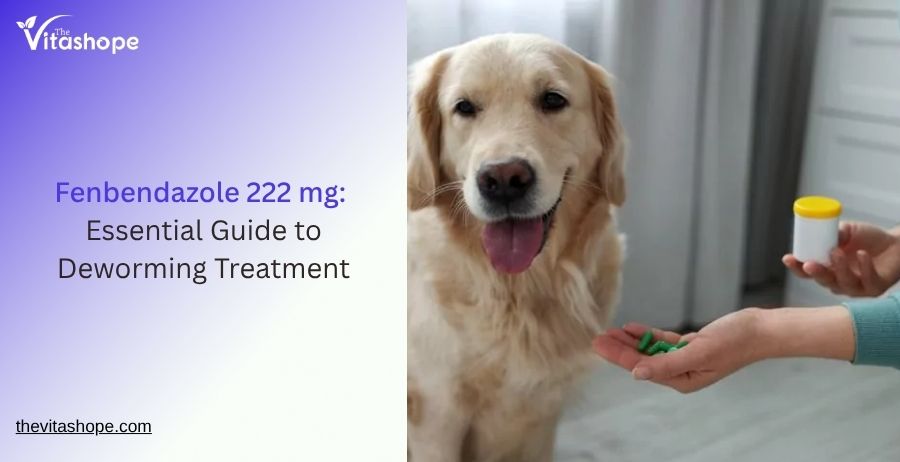
Fenbendazole 222 mg: Essential Guide to Deworming Treatment

Introduction
Fenbendazole 222 mg is a veterinary antiparasitic formulation used to help control certain intestinal parasites in susceptible animals. Fenbendazole belongs to the benzimidazole class of anthelmintic medicines and works against susceptible worms by interfering with essential cellular processes.
The 222 mg designation describes the strength or concentration of a particular formulation. It does not mean that every animal should receive 222 mg as a standard dose. Treatment depends on the animal species, body weight, parasite involved, product formulation, and applicable veterinary directions.
This guide explains how Fenbendazole 222 mg fits into veterinary deworming, including its uses, mechanism of action, treatment considerations, possible side effects, safety precautions, and parasite-prevention practices.
What Is Fenbendazole 222 mg?
Fenbendazole is a broad-spectrum veterinary anthelmintic used to control certain gastrointestinal parasites.
Some products are labeled according to concentration rather than as a simple tablet dose. For example, certain canine fenbendazole formulations contain 222 mg of fenbendazole per gram of product.
Therefore, pet owners should always check the complete product label rather than assuming that the number 222 mg represents the appropriate amount to administer.
Important product details include:
- Active ingredient
- Concentration
- Formulation
- Intended animal species
- Approved indications
- Administration instructions
- Storage requirements
How Does Fenbendazole Work?
Fenbendazole affects susceptible parasites by interfering with microtubule formation and other essential cellular processes.
This disrupts the parasite’s ability to maintain normal cellular function and obtain nutrients. Over time, susceptible parasites are damaged and eliminated from the animal’s gastrointestinal tract.
Its activity against parasites depends on the parasite species and the specific veterinary product being used.
What Parasites Can Fenbendazole Treat?
Fenbendazole products may be labeled for several gastrointestinal parasites, depending on the animal species and jurisdiction.
For certain canine formulations, labeled indications can include susceptible:
- Roundworms
- Hookworms
- Whipworms
- Certain Taenia tapeworms
The parasite coverage is not identical for every fenbendazole product. Some parasites require a different anthelmintic, so diagnosis and product selection matter.
Fenbendazole 222 mg in Veterinary Deworming
Deworming is most effective when the treatment is matched to the parasite.
A veterinarian may consider:
- The animal’s species.
- Body weight.
- Age and general health.
- Clinical symptoms.
- Parasite exposure.
- Fecal examination results when appropriate.
- The specific veterinary product available.
Fenbendazole is therefore one component of a broader parasite-control approach rather than a universal treatment for every type of worm.
Fenbendazole Compared With Other Deworming Medicines
Different veterinary anthelmintics have different parasite coverage.
| Veterinary treatment | General role | Coverage depends on | Key consideration |
|---|---|---|---|
| Fenbendazole | Broad-spectrum deworming | Species, product, parasite | Follow product-specific directions |
| Pyrantel | Intestinal parasite treatment | Susceptible roundworms and hookworms | Does not provide identical coverage to fenbendazole |
| Praziquantel | Tapeworm treatment | Susceptible cestodes | Commonly used when specific tapeworm infection is identified |
| Milbemycin | Parasite treatment/prevention | Product and species | Some formulations provide additional parasite protection |
| Moxidectin | Parasite prevention/treatment | Product and species | Often available in combination products |
| Combination products | Multi-parasite control | Active ingredients | Coverage varies by formulation |
The appropriate treatment should be selected according to the parasite and veterinary guidance rather than simply choosing the product with the highest numerical strength.
Is 222 mg the Correct Dose?
Not necessarily.
A product labeled 222 mg may describe concentration, such as 222 mg per gram, rather than the amount an animal should receive at one time.
The appropriate regimen can depend on:
- Body weight
- Animal species
- Parasite type
- Product concentration
- Treatment duration
- Veterinary instructions
Never calculate an animal’s treatment solely from the 222 mg number printed on a package.
How to Use Fenbendazole Responsibly
Use Fenbendazole 222 mg according to the specific veterinary product label or your veterinarian’s instructions.
Responsible administration includes:
- Confirming the animal species.
- Checking the product concentration.
- Measuring or administering the product accurately.
- Following the recommended treatment schedule.
- Avoiding unnecessary repeat treatment.
- Monitoring the animal during treatment.
- Contacting a veterinarian if symptoms persist.
Do not substitute a product intended for another species without veterinary advice.
Possible Side Effects
Many animals tolerate fenbendazole when it is used appropriately, but side effects can occur.
Possible adverse effects include:
- Vomiting
- Diarrhea
- Reduced appetite
- Mild gastrointestinal discomfort
Contact a veterinarian if your animal experiences persistent vomiting, severe diarrhea, marked weakness, unusual behavior, or other concerning symptoms.
An animal that remains sick after deworming may have another medical condition, a different parasite, reinfection, or another reason for treatment failure.
Why Diagnosis Matters Before Deworming
Not every digestive problem is caused by intestinal worms.
Symptoms such as:
- Diarrhea
- Vomiting
- Weight loss
- Poor appetite
- Abdominal discomfort
- Changes in stool
can have many possible causes.
A veterinarian may recommend fecal testing or other diagnostic evaluation when appropriate. Identifying the parasite can help determine whether fenbendazole is suitable or whether another treatment is required.
Preventing Parasite Reinfection
Deworming should be combined with practical parasite-control measures.
Helpful practices include:
- Remove animal feces promptly.
- Keep kennels and living areas clean.
- Wash bedding regularly.
- Maintain appropriate flea control where relevant.
- Prevent pets from eating feces or contaminated material.
- Follow recommended veterinary checkups.
- Use routine fecal monitoring when advised.
- Follow an individualized parasite-prevention program.
Environmental hygiene is especially important because some parasite stages can survive outside the animal and contribute to reinfection.
Fenbendazole and Pregnant Animals
Pregnancy and nursing require additional consideration.
Whether fenbendazole is appropriate can depend on the animal species, product labeling, stage of pregnancy, and clinical circumstances.
Do not assume that a product suitable for one animal or situation is automatically appropriate for another. Consult a veterinarian before treating pregnant or nursing animals.
Fenbendazole for Different Animal Species
Fenbendazole products are available for different veterinary uses, but product labels and approved indications vary.
A formulation intended for dogs should not automatically be used in cats, livestock, or other species.
Before administration, confirm:
- Species listed on the product.
- Approved indication.
- Product concentration.
- Administration instructions.
- Any species-specific precautions.
When there is uncertainty, a veterinarian should determine the appropriate product.
Fenbendazole Is Not a Human Deworming Medicine
Fenbendazole is a veterinary medicine.
Veterinary fenbendazole products should not be used as self-treatment for human illnesses. Products formulated for animals may differ in formulation, labeling, dosing information, and regulatory evaluation from medicines intended for people.
If a person suspects a parasitic infection, they should consult a qualified healthcare professional about an appropriate human treatment.
Buying Fenbendazole 222 mg Responsibly
When purchasing veterinary fenbendazole, use a legitimate veterinary pharmacy, veterinarian, or authorized supplier.
Check the package for:
- Product name
- Active ingredient
- Concentration
- Intended species
- Manufacturer information
- Expiration date
- Lot information
- Storage instructions
Avoid products with unclear labeling, damaged packaging, or unsupported claims about treating conditions outside their veterinary indications.
Storage and Handling
Follow the storage instructions printed on the specific product.
General precautions include:
- Keep the product in its original packaging.
- Protect it from excessive heat and moisture.
- Keep it away from children.
- Prevent animals from accidentally accessing the medication.
- Check the expiration date before use.
- Dispose of expired products according to local veterinary or pharmacy guidance.
Frequently Asked Questions
What is Fenbendazole 222 mg?
Fenbendazole 222 mg refers to a veterinary fenbendazole formulation or concentration. The exact meaning of the 222 mg designation depends on the product.
What is fenbendazole used for?
It is used in veterinary medicine to control certain susceptible gastrointestinal parasites.
Is 222 mg the correct dose for every animal?
No. The appropriate regimen depends on the animal, body weight, parasite, formulation, and veterinary instructions.
Can fenbendazole treat all worms?
No. Its activity depends on the parasite species and the specific product indication.
Can fenbendazole treat tapeworms?
Some fenbendazole products are labeled for particular tapeworm species, but coverage varies. A veterinarian can determine the appropriate treatment.
Can I give a dog fenbendazole intended for another species?
Do not substitute veterinary products without professional guidance.
Can cats use fenbendazole?
Some veterinary uses may exist, but product approval and directions vary. Consult a veterinarian before giving it to a cat.
Can pregnant animals receive fenbendazole?
This depends on species, product labeling, and clinical circumstances. Seek veterinary advice.
What are common side effects?
Possible effects include vomiting, diarrhea, reduced appetite, and other gastrointestinal symptoms.
What if symptoms continue after deworming?
Contact a veterinarian. Persistent symptoms may indicate reinfection, a different parasite, treatment failure, or another medical condition.
Can I combine fenbendazole with another dewormer?
Only if a veterinarian recommends the combination.
Does deworming prevent future infections?
Deworming treats susceptible parasites but does not eliminate future exposure. Environmental hygiene and an appropriate prevention program are also important.
Can humans take Fenbendazole 222 mg?
Fenbendazole is a veterinary medicine and should not be used for human self-treatment.
Can I buy Fenbendazole 222 mg online?
Veterinary product availability depends on the product and local regulations. Use legitimate veterinary suppliers.
How should Fenbendazole 222 mg be stored?
Follow the storage instructions on the specific product label and keep the medicine away from children and animals.
Final Thoughts
Fenbendazole 222 mg can have a useful role in veterinary deworming when the product is appropriate for the animal and the parasite being treated. However, the 222 mg designation should not be interpreted as a universal animal dose.
Effective parasite control involves choosing the correct veterinary product, following its directions, monitoring the animal, maintaining good hygiene, and using veterinary evaluation when diagnosis or treatment is uncertain.
For animal health concerns, consult a veterinarian before starting, changing, or repeating a deworming treatment.