
Blog
Fenbendazole 444 mg: Dosage Guide, Uses & Warnings

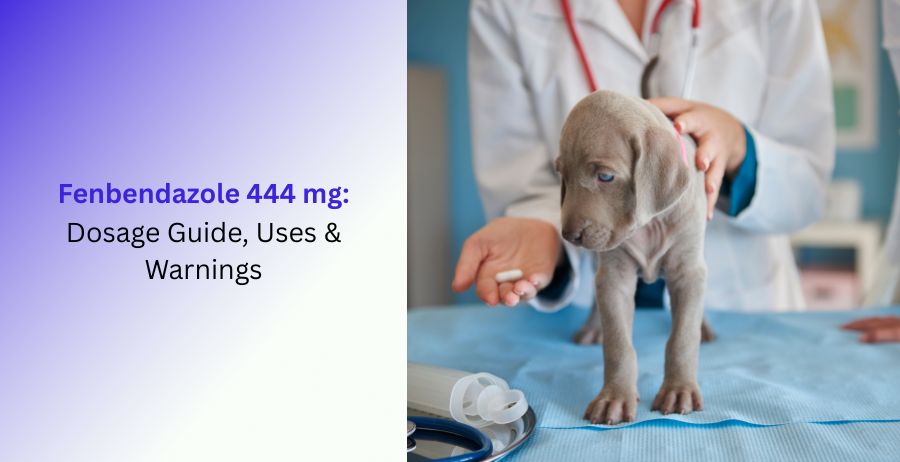
Fenbendazole 444 mg is a veterinary antiparasitic medicine belonging to the benzimidazole class. It is used to treat certain susceptible parasitic infections in animals. A 444 mg formulation indicates the amount of fenbendazole in a particular product, but the correct dose depends on the animal species, body weight, parasite, and product instructions.
Because fenbendazole is a veterinary medicine, it should not be used as a human treatment without appropriate medical guidance.
What Is Fenbendazole 444 mg?
Fenbendazole is a broad-spectrum anthelmintic used in veterinary medicine. Depending on the species and approved product, it can help control certain gastrointestinal parasites and other susceptible worms.
Potentially susceptible parasites may include:
- Roundworms
- Hookworms
- Whipworms
- Certain lungworms
- Some susceptible tapeworms
The approved indications vary by animal and product, so the label for the specific formulation is important.
How Does Fenbendazole Work?
Fenbendazole belongs to the benzimidazole group of antiparasitic medicines.
It interferes with microtubule formation in parasites, disrupting essential cellular functions and energy metabolism. This damages susceptible parasites and helps the animal eliminate them.
Its effectiveness depends on the parasite, animal species, treatment schedule, and appropriate dosing.
Fenbendazole 444 mg Uses
1. Gastrointestinal Worm Infections
Fenbendazole is commonly used in veterinary medicine against certain intestinal worms, including susceptible roundworms, hookworms, and whipworms.
2. Certain Lungworm Infections
Some formulations are approved for specific lungworm infections in particular animal species.
3. Veterinary Parasite Management
Veterinarians may use fenbendazole as part of a parasite-control program based on an animal’s risk factors, symptoms, environment, and diagnostic findings.
Fenbendazole is not a universal treatment for all parasites.
Fenbendazole 444 mg Dosage Guide
There is no single standard dose for every animal.
The appropriate regimen can depend on:
- Animal species
- Body weight
- Age
- Type of parasite
- Severity of infection
- Product formulation
- Veterinary recommendations
The 444 mg strength is not necessarily the complete treatment dose.
Some veterinary treatments are calculated according to body weight, while others follow a specific product schedule. The number of tablets or amount of product required can therefore vary significantly.
Do not calculate the dose based only on the 444 mg strength. Follow the product label or veterinarian’s instructions.
How to Administer Fenbendazole
Fenbendazole is commonly administered orally, but the exact administration method depends on the formulation.
For safe use:
- Use only the formulation intended for the animal species.
- Follow the recommended dosing schedule.
- Measure the dose carefully.
- Complete the prescribed treatment course.
- Avoid unnecessary repeat dosing.
- Contact a veterinarian if symptoms persist.
Fenbendazole Side Effects
When used according to veterinary directions, fenbendazole is generally well tolerated.
Possible side effects can include:
- Vomiting
- Diarrhea
- Reduced appetite
- Abdominal discomfort
- Increased salivation
If an animal experiences severe or persistent symptoms, contact a veterinarian.
Important Fenbendazole Warnings
1. Correct Species and Product
Different fenbendazole products can have different concentrations and approved uses. A product intended for one animal should not automatically be used for another.
2. Pregnancy
The suitability of fenbendazole during pregnancy depends on the animal species, pregnancy stage, and product. Veterinary advice is recommended before treatment.
3. Young Animals
Young animals may require dosing based on age and body weight. Veterinary guidance is particularly important for very young or underweight animals.
4. Existing Medical Conditions
Animals with underlying health problems or those taking other medicines may require additional veterinary assessment.
5. Persistent Symptoms
If symptoms continue after treatment, do not simply increase or repeat the dose. Persistent symptoms may indicate another condition, reinfection, resistance, or an incorrect diagnosis.
Fenbendazole 444 mg for Humans
Fenbendazole is not an approved routine human medicine.
There are online claims that fenbendazole may be useful for human cancer treatment. However, laboratory research and anecdotal reports do not establish veterinary fenbendazole as a safe or effective cancer treatment in humans.
People should not replace prescribed cancer therapy or other evidence-based treatments with fenbendazole.
For human health concerns, consult a qualified healthcare professional about approved treatment options.
Fenbendazole 444 mg vs 222 mg
| Feature | Fenbendazole 222 mg | Fenbendazole 444 mg |
|---|---|---|
| Active ingredient | Fenbendazole | Fenbendazole |
| Strength | 222 mg | 444 mg |
| General use | Veterinary antiparasitic | Veterinary antiparasitic |
| Dose determination | Depends on species and product | Depends on species and product |
A 444 mg formulation contains twice the amount of active ingredient as a 222 mg formulation, but that does not mean it should be given at half or double a particular treatment schedule. Follow the specific product directions.
Frequently Asked Questions
1. What is Fenbendazole 444 mg?
Fenbendazole 444 mg is a veterinary formulation containing 444 mg of the active ingredient fenbendazole per specified unit.
2. What is fenbendazole used for?
It is used in veterinary medicine to treat certain susceptible parasitic infections.
3. Is 444 mg a standard dose?
No. The correct dose depends on the animal, body weight, parasite, and formulation.
4. Can dogs use fenbendazole?
Fenbendazole is used in veterinary medicine for certain parasitic infections in dogs. The appropriate dose should follow veterinary or product instructions.
5. Can cats use fenbendazole?
Use in cats depends on the specific indication and formulation. Consult a veterinarian before treatment.
6. What worms can fenbendazole treat?
Depending on the animal and approved product, fenbendazole may work against certain roundworms, hookworms, whipworms, lungworms, and other susceptible parasites.
7. What are common side effects?
Possible effects include vomiting, diarrhea, reduced appetite, and gastrointestinal discomfort.
8. Can pregnant animals receive fenbendazole?
The decision depends on species and product. Consult a veterinarian before use during pregnancy.
9. Can humans take Fenbendazole 444 mg?
Veterinary fenbendazole products should not be self-administered by humans.
10. Does fenbendazole treat cancer?
Fenbendazole is not an approved human cancer treatment. Claims about cancer use should not replace evidence-based medical care.
11. How should Fenbendazole 444 mg be stored?
Follow the storage conditions provided on the specific product label, including temperature and packaging requirements.
12. Can fenbendazole treat every parasite?
No. It is effective only against susceptible parasites and is not a universal antiparasitic medicine.
13. What if the animal remains sick after treatment?
Contact a veterinarian rather than giving additional doses without advice. Further testing may be necessary.
14. Is Fenbendazole 444 mg safe for all animals?
No. Safety and approved use depend on species, formulation, dose, age, and individual health factors.
15. Is 444 mg better than 222 mg?
Not necessarily. A higher-strength formulation is not automatically more effective. The correct strength depends on the animal and prescribed treatment regimen.
Final Thoughts
Fenbendazole 444 mg is a veterinary antiparasitic formulation used for certain susceptible parasites in animals. Its dosage is not determined by tablet strength alone; species, body weight, parasite type, and product instructions all matter.
The most important safety point is to follow veterinary guidance and the specific product label. Do not increase, decrease, or repeat treatment without appropriate advice.
Fenbendazole is also not an approved routine human medicine, and veterinary products should not be used as substitutes for human medical treatment.
If your animal has symptoms of a parasitic infection, a veterinarian can determine the likely cause and recommend the appropriate treatment.
Medical disclaimer: This article is for general educational purposes only and does not replace professional veterinary or medical advice, diagnosis, or treatment. Always consult a qualified veterinarian or healthcare professional before using any medicine.